For more than half a century, the IRCM has contributed to the development and training of generations of researchers who advance biomedical knowledge. Each year, many of them defend their theses before moving on to other horizons to begin their careers in various fields of health research. These talented individuals make up the IRCM's extended family around the world, the IRCM Cercle.
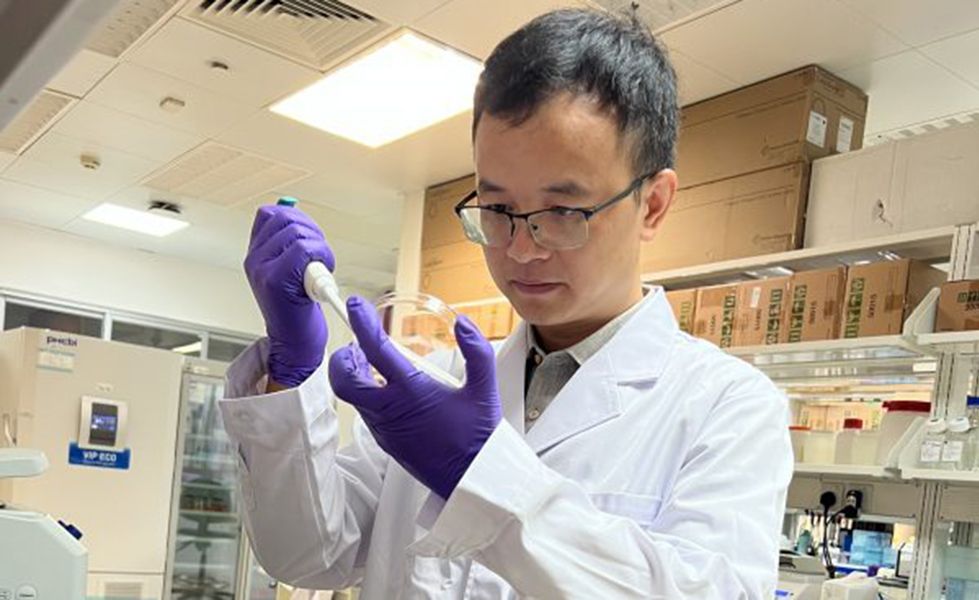
Among them is Dr. Zhenghai Tang, a former postdoctoral fellow in Dr. André Veillette's laboratory, who now heads his own research laboratory in China.
1. Tells us about your journey at the IRCM, the learning atmosphere.
During my Ph.D., I was deeply impressed by Dr. André Veillette’s pioneering work on immune checkpoints in cancer. Visiting his lab for an interview, I was struck by the team's professionalism and warmth, and by the IRCM’s outstanding core facilities—confirming it as my ideal research environment. I began my postdoctoral training there in 2017.
Working in Dr. Veillette’s lab was a rewarding experience. Lab members were exceptionally supportive, and Dr. Veillette was always accessible, enabling me to resolve questions quickly and collaborate internationally. The environment encouraged independent thinking and provided essential guidance for my growth as a scientist. Access to superb platforms—including animal facilities, flow cytometry, and microscopy—was invaluable to my research.
The IRCM regularly hosted leading global scientists, exposing me to diverse ideas and inspiring exchanges. I am grateful for fellowship support from the IRCM Foundation and Cole Foundation, which recognized my work on macrophage responses to cancer. This backing, combined with Dr. Veillette’s mentorship, allowed me to present at conferences in locations such as Banff, Nova Scotia, and China.
2. What was your research about?
Harnessing the immune system to destroy cancer is a promising therapeutic strategy. Macrophages - innate immune cells - can engulf and eliminate cancer cells through phagocytosis. However, tumours evade this by overexpressing the "don't eat me" signal CD47, which binds the inhibitory macrophage receptor SIRPa. Blocking the CD47-SIRPa interaction has shown clinical potential.
My research revealed that SIRPa suppresses macrophage phagocytosis and anti-tumour immunity not only by interacting in trans with CD47 but also by binding in cis to CD18 on the macrophage surface. Antibodies that disrupt both interactions demonstrate greater therapeutic efficacy than those blocking either one alone. This finding, published in Science Immunology (2025) and highlighted by Science (2025), indicates that both SIRPa-CD47 trans and SIRPa-CD18 cis interactions should be considered for developing next-generation SIRPa-blocking therapies.
Additionally, I found that CD47 suppresses phagocytosis by directly "masking" the pro-phagocytic ligand SLAMF7 on the same tumour cell. We developed a novel SLAMF7 antibody, Z10, which liberates SLAMF7 from CD47, enhancing tumour cell elimination. Z10 shows high efficacy against SLAMF7-positive cancers, especially in combination therapies, suggesting its potential as a new treatment for malignancies like multiple myeloma and lymphoma. This work was published in Nature Immunology (2023).
Furthermore, macrophages typically phagocytose only a limited range of cancers. In collaboration with Dominique Davidson, I demonstrated that elevating levels of the pro-phagocytic integrins CD11c and CD11a on macrophages broadens their target spectrum. This work was published in Cell Reports (2021).
3. Tell us about your experience of being a PI in the last year?
My transition to the role of Principal Investigator at the University of Macau has been an exhilarating new chapter. While I miss the daily camaraderie and direct mentorship of Dr. Veillette's lab, I am now dedicated to building my own research team and fostering a similarly supportive, rigorous, and collaborative environment.
I aim to be as accessible to my trainees as my mentor was to me, and I underscore the importance of foundational scientific thinking. The primary excitement now lies in charting my lab's unique research direction and guiding the next generation from an initial idea to full discovery.
It is a profound responsibility, yet also a great privilege, to build upon the foundation established during my time at Montreal Clinical Research Institute and to contribute to the scientific community from this new position of leadership.