IRCM Researcher Sheds New Light on a Century-Old Neuroscience Question
A brand new study published in Current Biology by a research team at the Montreal Clinical Research Institute (IRCM),provides important new insights into how the brain’s body map takes shape, knowledge that could prove crucial to cure certain diseases.
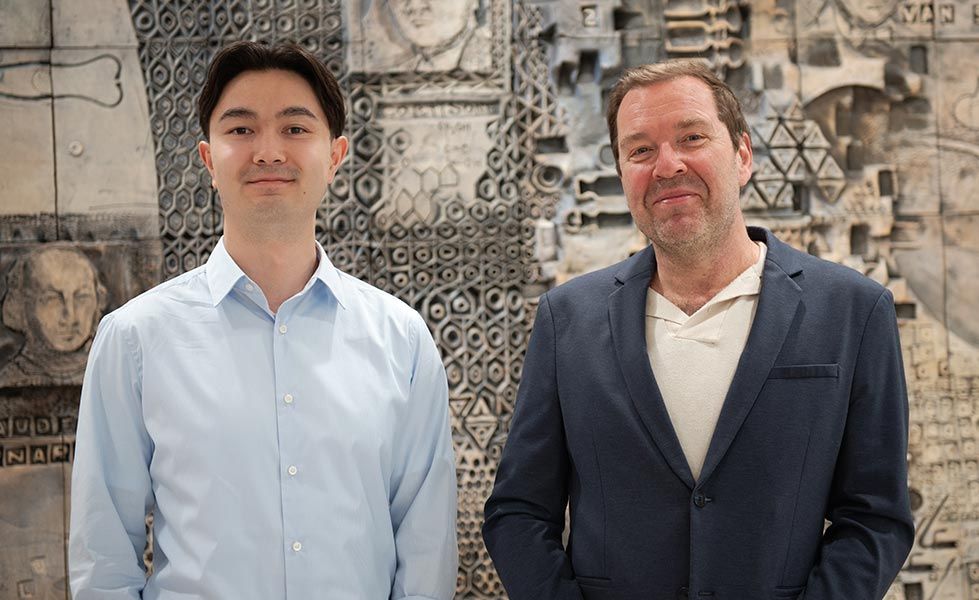
This exciting work by PhD student Kevin Sangster in the lab of Dr. Artur Kania, in collaboration with the Liqun Luo lab from Stanford University, identifies how somatotopic maps emerge during the development of the nervous system.
In the Steps of Wilder Penfield, at the Source of Our Understanding of the Brain
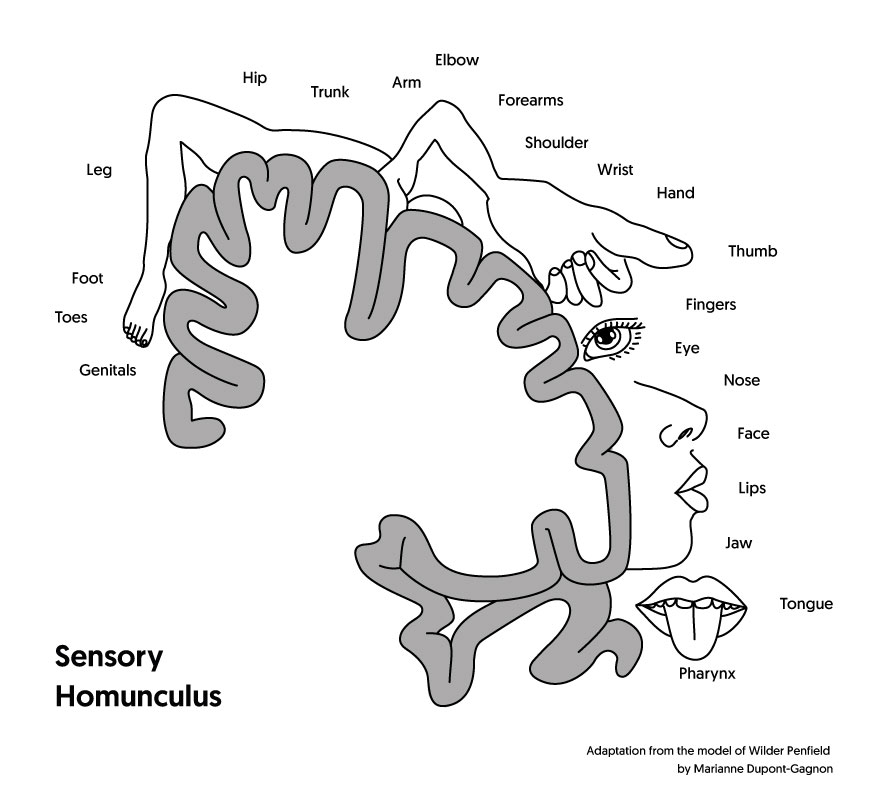
Nearly a hundred years ago, neurosurgeon and neuroscientist Wilder Penfield, founder of the Montreal Neurological Institute (The Neuro), revealed one of the brain’s most iconic features: somatotopic maps—precise brain representations of the body in which neighbouring brain regions correspond to neighbouring body parts. These discoveries, famously illustrated by the “homunculus,” transformed our understanding of how the brain is organized.
Yet one fundamental question has remained largely unanswered: how do these maps form in the first place?
Building the Brain’s Map of Our Own Body
Somatotopic maps act like an internal GPS, allowing the brain to pinpoint where sensations—such as a touch or a pinprick—originate on the body. While these maps are well established in adults, little was known about the molecular mechanisms that guide their formation early in life.
Kevin Sangster and his colleagues discovered that gradients of two proteins, called teneurin-3 and latrophilin-2, play a central role in setting up these maps at the very beginning of sensory processing. These proteins help guide connections from sensory neurons to their correct targets in the spinal cord, ensuring that information from different parts of the body is routed accurately to the brain.
“What is more important than the identity of these molecules is the fact that we can now manipulate body maps and finally start learning about their function”, explains Kevin Sangster.
Why It Matters
First, the study provides solid evidence that somatotopic maps are essential for our ability to precisely locate where a sensation is coming from in our body. Second, body maps are plastic and can be reorganized following trauma or injury such as amputation. The molecular gradients we discovered might control these processes and thus be important for recovery from stroke or spinal cord injury.
“Finally, body maps have been involved in social interactions and our brains’ representation of the relationship between our bodies and other individuals,” says Dr. Artur Kania. “They have also been implicated in neurodevelopmental disorders that affect social interactions, such as autism, and it is exciting to speculate what role they might be playing there.”
A Legacy Rooted in Montreal
The discovery carries special significance in Montreal, where Penfield conducted his groundbreaking work at the institution that still bears his legacy. By uncovering mechanisms that explain how somatotopic maps are established, the new study builds a direct bridge between Penfield’s clinical observations and modern molecular neuroscience.
By pushing this understanding further, this IRCM work enables science to gather precious information for future research.
Acknowledgements
The research team wishes to warmly thank The Doggone Foundation, The Canadian Institutes of Health Research, as well as the IRCM Foundation.
The study, “Teneurin-3 and latrophilin-2 are required for somatotopic map development and somatosensory topognosis,” is published in Current Biology.
About the IRCM
The Montreal Clinical Research Institute (IRCM), founded in 1967, is a leading biomedical research and innovation center located in Montreal. It integrates fundamental and clinical biomedical research to improve health, with 34 specialized laboratories. Affiliated with Université de Montréal and associated with McGill University, the IRCM trains the next generation of scientists and houses a specialized clinical research unit.