IRCM researchers uncover a key mechanism explaining its role in bone remodeling
Best known for its essential role in blood clotting, vitamin K may also play a far more specific and important role in bone health than previously thought. Researchers at the Montreal Clinical Research Institute (IRCM) have identified a fundamental biological mechanism that explains, for the first time, how vitamin K contributes to the regulation of bone remodeling—A delicate balance between bone formation and bone breakdown that is essential for maintaining bone strength.
Conducted in Dr. Mathieu Ferron’s laboratory, this research identifies a key protein called GAS6, as the missing molecular link between vitamin K and cell activity responsible for bone resorption. In the presence of vitamin K, GAS6 undergoes an essential modification known as gamma-carboxylation, which enables it to transmit effective signals to neighbouring cells.
Acting Upstream of Bone Remodeling
The researchers showed that GAS6 acts directly on pre-osteoclasts, immature cells destined to become osteoclasts which are specialized cells responsible for bone degradation. GAS6 regulates a critical step in their development called cell fusion, which is required to form large, multinucleated cells capable of efficiently resorbing bone.
When this mechanism is disrupted in mice by preventing vitamin K–dependent activation of GAS6, the fusion of pre-osteoclasts is markedly reduced. The result is fewer active osteoclasts and denser bones. Conversely, increasing levels of active GAS6 lead to enhanced bone resorption and decreased bone density.
A Discovery That Clarifies Years of Clinical Observations
For several years, human studies have suggested that adequate vitamin K intake is associated with a reduced risk of fractures and, in some cases, improved bone health. However, these findings were largely based on population level (epidemiological) studies, lacking a clear biological explanation, which contributed to inconsistent results in supplementation trials.
“Our findings provide a strong molecular basis to help interpret these observations,” explains Dr. Ferron. “They show precisely how vitamin K influences the balance between bone formation and resorption by acting on a key cellular step.”
New Perspectives for Fracture Prevention
Although this work was conducted in a mouse model, it represents an important first step toward a better understanding of vitamin K’s role in human bone health. Future studies will aim to determine whether this mechanism also operates in human bone cells and whether variations in vitamin K status or GAS6 activity are associated with measurable differences in bone remodeling or fracture risk.
In the longer term, this discovery may pave the way to more targeted therapeutic approaches rather than nutritional supplementation alone, by directly modulating the molecular players involved in bone resorption in individuals at risk of osteoporosis.
Acknowledgements
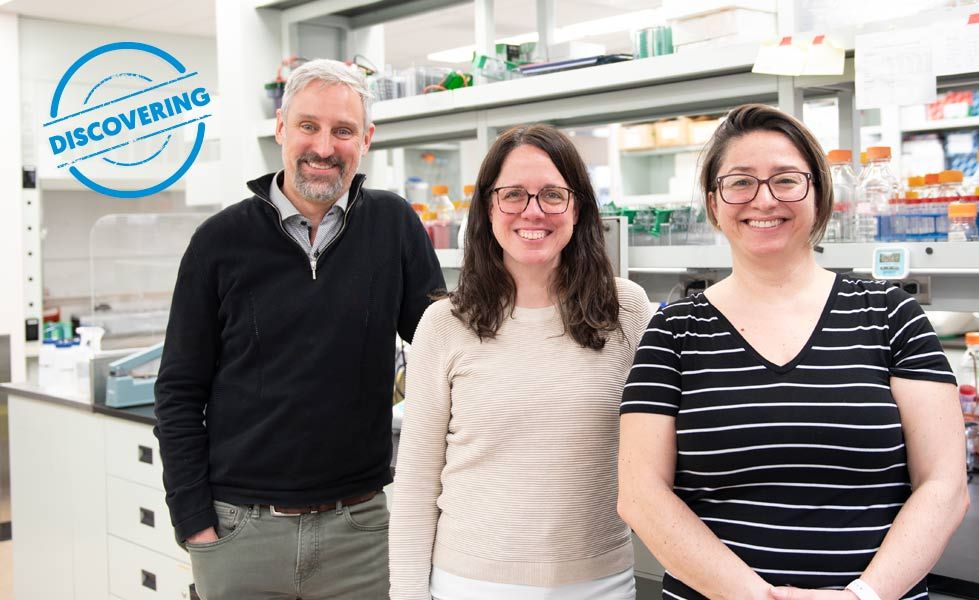
This research was conducted in the Ferron laboratory by research assistants Monica Pata and Diep Pham, associate researcher Julie Lacombe, former postdoctoral fellow Ashok Reddy, and former trainee Young Woong Kim. The researchers also thank collaborators Abeer Gamal Ali Ahmed and Monzur Murshed from the Montreal Shriners Hospital for Children.
This work was funded by the Canadian Institutes of Health Research (CIHR) and the Fonds de recherche du Québec – Santé (FRQS).