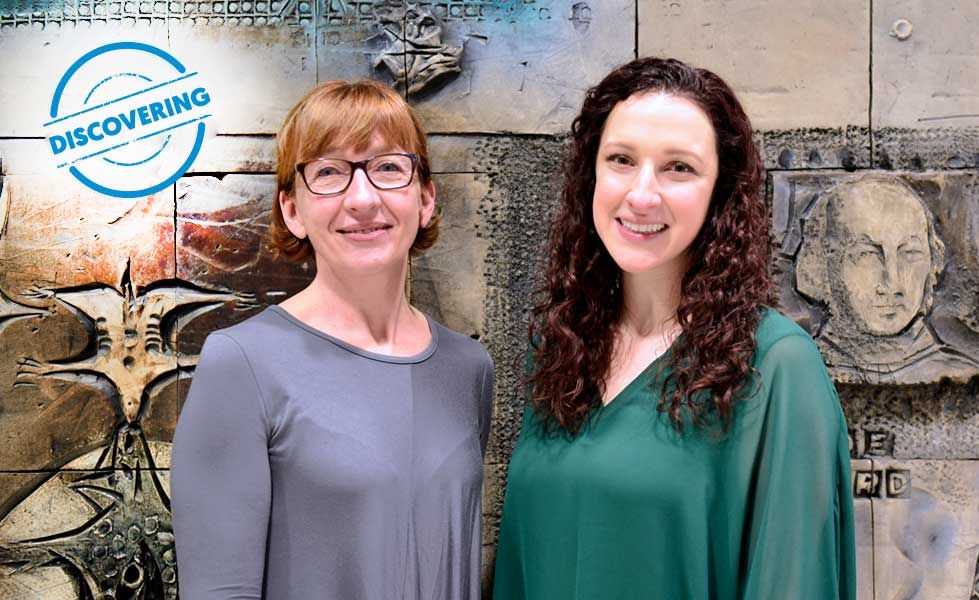
Research by Dr. Marie Kmita at IRCM goes to the heart of understanding the essential mechanisms of limb development.
A research team at the Montreal Clinical Research Institute (IRCM), led by Dr. Marie Kmita (and first-author Claudia), has made a significant advance in understanding the mechanisms that enable embryos to properly form their limbs. Recently published in the journal PNAS, this study highlights the crucial role of certain molecular systems that act as true “genetic brakes,” ensuring that development proceeds correctly.
At the very beginning of limb formation, certain genes must be activated to initiate the process. But once this first step is completed, those same genes must be rapidly switched off to allow subsequent genetic programs to take over and complete development. The team’s work shows that two groups of proteins, known as Polycomb complexes (PRC1 and PRC2), cooperate to silence these genes at the right time.
In mouse models, the researchers demonstrated that altering one of these systems already leads to abnormalities in gene expression. When both systems are disrupted simultaneously, the consequences are major: early genes remain active and normal limb development is severely compromised.
“This discovery illustrates how development relies on finely tuned and precise orchestration of gene expression. Understanding these mechanisms is essential to better grasp the origin of certain malformations,” said Dr. Jean François Côté, President and Scientific Director of the IRCM, adding: “Once again, the Kmita laboratory is producing innovative work that is highly meaningful for a deep understanding of human development.”
Beyond limb formation, these findings reveal a fundamental principle of development: cells must not only activate the right genes but also remember which ones must remain switched off. This regulatory system helps prevent errors that could lead to congenital abnormalities.
The work of Dr. Kmita and her team opens new research avenues. The next step will be to identify the signals that guide the recruitment of these Polycomb complexes to the right genes at the right time—a key question for deepening our understanding of embryonic development and its dysregulation.
Acknowledgments
The team would like to thank the Canadian Institutes of Health Research (CIHR) for their financial support, as well as their collaborators, including Alexandre Mayran, Christian Poitras, and François Robert, for their contribution to the bioinformatics analyses. They also acknowledge the contribution of the IRCM genomics platform and the animal care staff.
An Internationally Recognized Researcher
The director of the IRCM’s Research Unit in Genetics and Development and a leading figure in developmental biology, Dr. Marie Kmita is renowned for her innovative work on the genetic and epigenetic mechanisms that orchestrate organ formation. Also a professor at Université de Montréal, she has established herself over the years as a specialist in limb development and the regulation of Hox genes. A recipient of the Marcel-Piché Award, her research, published in leading scientific journals, has significantly advanced our understanding of the genetic programs that shape the organism.