-
Careers • News • Contact us •
- Login
- Français


Apr 13, 2026
From 11:30 AM to 12:30 PM
Location
IRCM Auditorium110, avenue des Pins ouestMontréal, QC, H2W 1R7Canada
IRCM Conference
Pascale Cossart
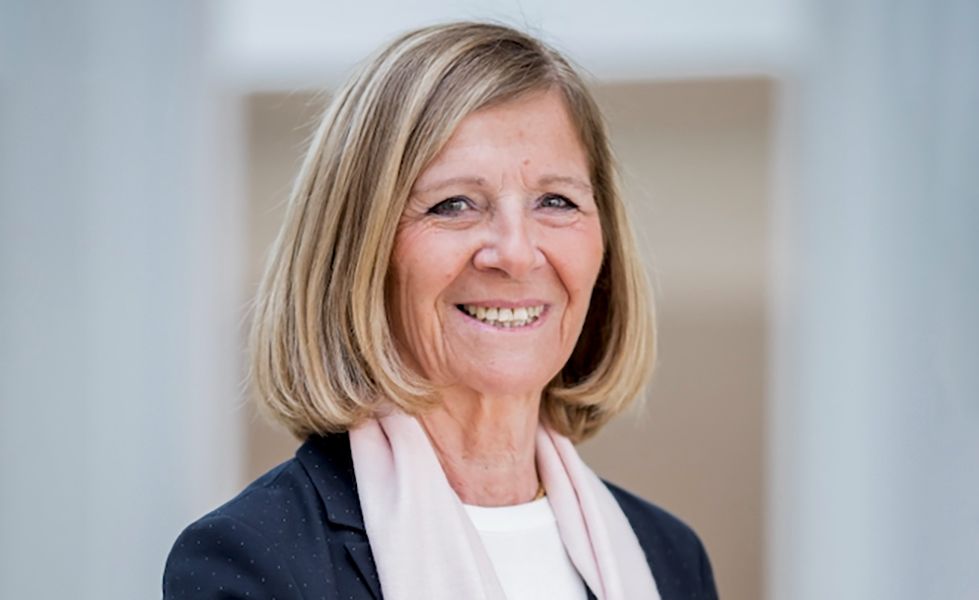
How we raised a bacterium to the rank of a model system: the Listeria paradigm.
Pascale Cossart, PhD
Emeritus Professor
Pasteur Institute
Head
Bacteria-Cell Interactions Unit
Paris, France
This conference is hosted by Nabil Seidah, PhD. This conference is part of the 2025-2026 IRCM conference calendar.
About this conference
In nearly four decades, using several multidisciplinary approaches and cutting-edge technologies we have unveiled a number of sophisticated mechanisms used by the bacterial pathogen Listeria monocytogenes to survive in the environment and/or infect mammals. Our results have led to a series of new concepts in infection biology, in fundamental microbiology- in particular RNA mediated regulation-, in cell biology and also in epigenetics, paving the way to the understanding of the basis of many other infections. An historical perspective with most striking findings will be presented.
P. Cossart (2023). Raising a bacterium to the rank of a model system : the Listeria paradigm. Ann. Rev. Microbiol. 77 : 1-22
About Pascale Cossart
After studying chemistry in Lille and at Georgetown University, Washington DC, Pascale Cossart (PC) arrived at the Pasteur Institute in 1971 to prepare her PhD thesis. PC then pursued her whole career at the Pasteur Institute where she directed the Bacteria-Cell interactions unit. Her PhD thesis concerned the sequence of a bacterial protein. During her post-doc, PC then cloned and sequenced the gene encoding this protein, the first gene sequenced in the Pasteur Institute. Several collaborations ensued including for the sequencing of Escherichia coli crp gene that encodes a transcriptional regulator. Through the study of altered specificity mutants, PC contributed to highlight the role of the helix-turn-helix motif of regulators in DNA-protein interactions and specificity (Nature 1984).
In 1986, on the request of the Pasteur direction to reorient her work on infections, PC undertook to study the molecular and cellular basis of bacterial infections, taking as model Listeria monocytogenes bacterium responsible for food borne infections leading to gastrointestinal infections and meningitis. Her research led to multiple breakthroughs, e.g. the molecular and cellular mechanisms allowing crossing of the intestinal and foeto-placental barrier by the bacterium (Cell 1991, Cell 1996, Science 2001, PNAS 2004), the discovery of ActA, the factor allowing the actin-based motility of the bacterium (Cell 1992) as well as novel mechanisms of RNA-mediated regulation of gene expression (PNAS 2013, Science 2014, Science 2016, PNAS 2018), in particular, the first thermo-sensor regulating expression of virulence factors (Cell 2002). PC coordinated the sequencing of the Listeria monocytogenes genome and that of the non-pathogenic species Listeria innocua (Science 2001), showed the regulatory role of mitochondria in infection (PNAS 2013), unveiled several protein modifications induced by bacteria and critical for infection, e.g. SUMOylation (Nature 2010) and pioneered the field of host epigenetics and infection (PNAS 2007, Science 2011, Science 2013). PC contributions were recognized by numerous international prizes including the L’Oréal/Unesco award, the Lounsbery Prize, the Robert Koch prize, the Jeantet prize, the Balzan prize, the Selman Waksman award. She was elected member of the French Academy of sciences (and secrétaire perpétuel from 2016 to 2021), international member of NAS and NAM, of the Royal Society, and of the Leopoldina. (For a recent autobiography see Ann. Rev. Microbiol. (2023) 77 : 1-22).
To make sure you don't miss any of the IRCM conferences, sign up now for our newsletter!

110, ave des Pins West,
Montréal (Québec) Canada
H2W 1R7
514 987-5500


Partners

Research
Platforms
Student life
Admissions
The Institure
- A word from the president
- Our impact
- Our Legacy
- Governance
- Management Committee
- IRCM Awards
- Annual reports
Events
The Clinic
© Montreal Clinical Research Institute, Année.All rights reserves. | Privacy policy | Terms of use | Web site by Agence Riposte