
-
Careers • News • Contact us •
- Login
- Français


Events to come
Nov 12, 2026
From 11:30 AM to 12:30 PM
Location
IRCM Auditorium110, avenue des Pins ouestMontréal, H2W 1R7
Special Conference
Kodi Ravichandran
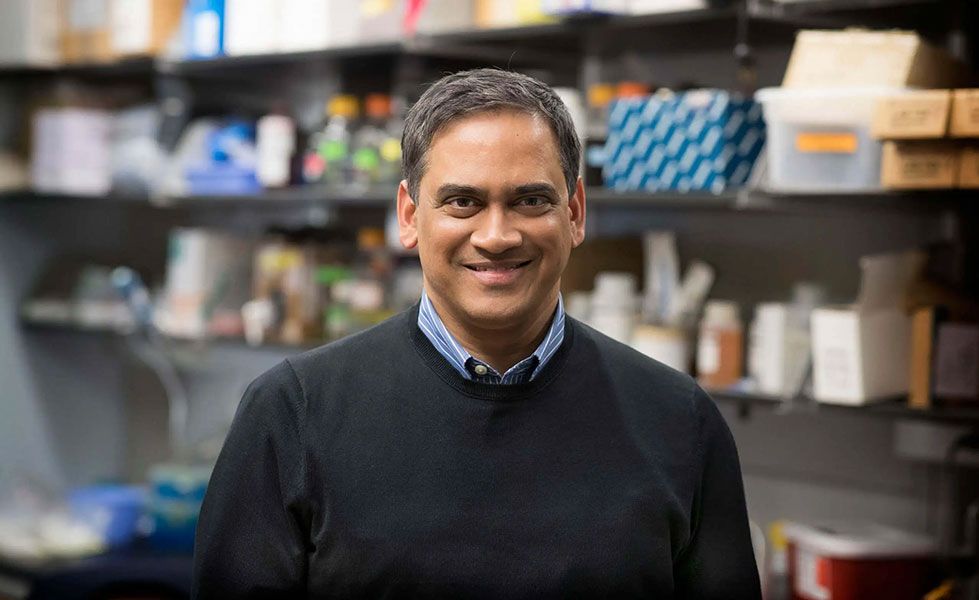
How to eat a good apoptotic meal: Lessons from phagocytes
Kodi Ravichandran, BVSc, PhD
Robert L. Kroc Professor & BJC Investigator
Chief, Division of Immunobiology
Department of Pathology and Immunology
Washington University School of Medicine
St. Louis, MO, USA
About this conference
Every day, we turn over billions of cells as part of normal development and homeostasis. Majority of these cells die by via caspase-dependent apoptosis. The recognition and phagocytic removal of these apoptotic cells occurs via the process of ‘efferocytosis’ and is fundamentally important for our health. Failure to promptly and efficiently clear apoptotic cells can lead to chronic inflammation, autoimmunity and developmental defects. Efferocytosis is usually done by neighboring cells or by professional phagocytes such as macrophages and dendritic cells, although many non-professional phagocytes such as epithelial cells and fibroblasts can function as efferocytes in different tissues in vivo.
In studying efferocytosis, we consider four broad issues related to ‘eating an apoptotic meal’. The first issue is getting to the meal itself. This involves the release of so called ‘find-me signals’ from apoptotic cells that serve as attraction cues to recruit monocytes and macrophages near an apoptotic cell. Besides the phagocyte recruitment function, we have also identified a critical role for metabolites released from apoptotic cells as ‘good-bye signals’ that impact the tissue in multiple ways. In this context, we focus on Pannexin channels, which are ‘opened’ during apoptosis by caspase-mediated cleavage. Pannexins are one of the key conduits for release of metabolites from apoptotic cells. Pannexin channels can also play roles in live cells, for example in communication between Teff and Treg cells.
The second issue is determining what is on the menu, and distinguishing the apoptotic cell from the neighboring healthy cells. This is achieved through expression of ‘eat-me’ signals on apoptotic cells and their recognition by receptors on phagocytes. Here, we focus on the ligands on the dying cell and receptors on phagocytes that are involved in the specific recognition of apoptotic cells. Our work has identified a novel role for the adhesion type GPCR BAI1 as a receptor for phosphatidylserine, a key eat-me signal exposed on apoptotic cells.
The third issue we study is the act of eating the meal itself. Here, we focus on the specific intracellular signals that are initiated within the phagocyte when it comes in contact with apoptotic cells, and how this leads to cytoskeletal rearrangements of the phagocyte and internalization of the target (imagine swallowing a neighbor nearly your own size!). We have extensively studied a signaling pathway downstream of BAI1 involving the proteins ELMO1, Dock180 and the small GTPase Rac in membrane reorganization. We have generated transgenic and knockout mice targeting various engulfment molecules. Our recent work has highlighted the induction of a solute carrier proteins (SLCs) program in phagocytes and how SLCs control the appetite of a phagocyte.
The fourth topic relates to ‘after-the-meal’ issues. Contrary to other types of phagocytosis (such as bacterial uptake), engulfment of apoptotic cells is actively anti-inflammatory. We are interested in determining how apoptotic cells induce an anti-inflammatory state of the phagocyte, and how this relates to immune tolerance.
Another fun problem when one cell eats another cell is that the phagocyte essentially doubles its cellular contents (including protein, cholesterol, nucleotides etc. – think of a neighbor moving into your house!). We are addressing how the ingested cargo is processed within the phagocyte, and how the phagocyte manages homeostasis and continue to ingest multiple corpses in succession. Phagocytes do not function alone, and in tissues they are next to other phagocytes and other cells; thus, we also focus on how efferocytic phagocytes communicate with each other and other cells. Given how many auto-inflammatory diseases are now linked to failed or defective efferocytosis, we are interested in how we can boost efferocytosis in vivo. We study disease models of lung inflammation, arthritis, colitis, and atherosclerosis to pick apart the functional role efferocytosis and key regulatory players. The overall goal of these studies is to eventually benefit from manipulating the efferocytic process in disease states.
About Kodi Ravichandran
Kodi Ravichandran is an immunologist and a leading researcher in the area of efferocytosis, the process by which we remove billions of dying cells in the body on a daily basis, and how efferocytosis impacts many human diseases such as lupus, arthritis, airway inflammation, atherosclerosis, colitis., and cancer He is currently Robert L. Kroc Professor and Chief of the Division of Immunobiology in the Department of Pathology and Immunology at Washington University in Saint Louis, Missouri, USA. Dr. Ravichandran obtained his degree in Veterinary Medicine from Madras Veterinary College (Chennai, India) in 1987. During the last two years of Veterinary School, he became interested in the molecular biology of cellular processes, and how specific drugs function at a molecular level. This led to his pursuing a PhD in Molecular and Cell Biology/Immunology at the University of Massachusetts at Amherst in the United States. For his doctoral work, he addressed how temporal gene expression and antibody specificities contribute toward the repertoire of B lymphocytes in various lymphoid organs in mice. Dr. Ravichandran then moved to the Dana-Farber Cancer Institute (Boston, MA) to pursue his post-doctoral research with Dr. Steven Burakoff. Here, he focused on intracellular signaling in T cells and addressed the role of adapter proteins (1992-1996). He was also an instructor at Harvard Medical School.
In 1996, Dr. Ravichandran moved to the University of Virginia School of Medicine (Charlottesville, VA) as Assistant Professor to establish his independent laboratory. He moved up the ranks and was promoted to Full Professor (2004) and was given the Harrison Distinguished Professor of Microbiology (2008). In 2010, he became the Chair of the Department of Microbiology, Immunology, and Cancer Biology (the largest basic science Department within UVA School of Medicine). Dr. Ravichandran also directed the Center for Cell Clearance from 2008- Dec2021 (a collaborative effort across UVa). He received the State of Virginia Governor's Award for Science Innovation in 2011, and was awarded the Robert J. Kadner Mentoring Award for outstanding training of graduate students and post-doctoral fellows. As of Jan 2022, Dr. Ravichandran moved to his current position in Washington University in St. Louis, as BJC Investigator and the Chief of the Division of Immunobiology (Dept of Pathology and Immunology).
Dr. Ravichandran's group has published ~200 papers in leading journals, with an H-index of 89 (as of June 2026). Dr. Ravichandran has been recognized as ‘Highly Cited Researcher’. He has trained >50 postdoctoral fellows and 28 PhD students, with 20 of his former postdoctoral fellows having secured faculty positions in different countries, (including United States, Australia, UK, India, Belgium, Korea, Portugal, and Japan) and seven former post-docs in mid-level or senior positions in the biotech/ pharmaceutic industry, including one as CEO.
To make sure you don't miss any of the IRCM conferences, sign up now for our newsletter!

110, ave des Pins West,
Montréal (Québec) Canada
H2W 1R7
514 987-5500


Partners

Research
Platforms
Student life
Admissions
The Institure
- A word from the president
- Our impact
- Our Legacy
- Governance
- Management Committee
- IRCM Awards
- Annual reports
Events
The Clinic
© Montreal Clinical Research Institute, Année.All rights reserves. | Privacy policy | Terms of use | Web site by Agence Riposte
