-
Careers • News • Contact us •
- Login
- Français


Events to come
Oct 19, 2026
From 11:30 AM to 12:30 PM
Location
IRCM Auditorium110, avenue des Pins ouestMontréal, H2W 1R7
IRCM Conference
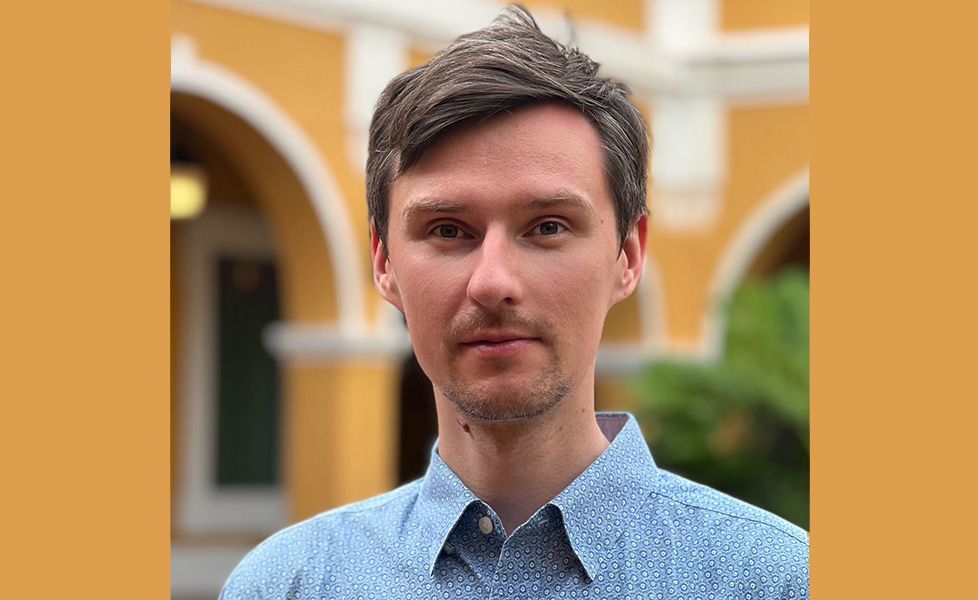
Dmitry A. Kretov
Toward quantitative analysis of RNA–protein interactions in living cells
Dmitry A. Kretov, PhD
Assistant professor
Department of Molecular Biology,
Medical Biochemistry, and Pathology
Université Laval
CHU de Québec – Université Laval Research Center
This conference is hosted by Martin Sauvageau, PhD . This conference is part of the 2026-2027 IRCM conference calendar.
About this conference
RNA–protein interactions are central to post-transcriptional gene regulation; however, measuring these interactions quantitatively in living cells remains a major challenge. Existing approaches often rely on RNA or protein purification, crosslinking, or antibody-based enrichment, making it difficult to directly measure interaction strength and sequence specificity in their native cellular context. In this talk, I will present RBPscan, a genetically encoded approach that we have recently developed for quantitative analysis of RNA–protein interactions in living cells. RBPscan couples an RNA-binding protein to an engineered RNA editor, enabling protein–RNA interactions to be recorded as nucleotide changes in a reporter RNA. This approach allows RNA–protein interactions to be detected without UV crosslinking or antibodies and can be applied in mammalian cells and zebrafish embryos. I will present how RBPscan can be used to systematically interrogate RNA sequence and structural determinants of protein binding and to generate quantitative interaction landscapes across large RNA libraries. I will also present applications of RBPscan aimed at understanding how RNA–protein interactions influence the fate of mRNAs, including their stability and translation. Finally, I will discuss how this technology may provide a framework for studying dynamic RNA–protein interactions in response to cellular stress and in pathological contexts relevant to neurodegenerative disorders. In summary, I will present how RNA editing can be used as a molecular recording mechanism to move toward quantitative, in vivo measurements of RNA–protein interactions and to better understand their contribution to post-transcriptional regulation.
About Dmitry A. Kretov
Dr. Dmitry Kretov is a Group Leader in the Oncology Axis of the CHU de Québec – Université Laval Research Center, where he established his research laboratory in January 2025. He is also an Assistant Professor at Université Laval. His research focuses on understanding the roles of RNA-binding proteins (RBPs) and microRNAs in regulating mRNA stability and translation in development and disease.
Originally from Voronezh, Russia, Dr. Kretov earned his Bachelor’s and Master’s degrees before completing a joint PhD program between Université Paris-Saclay in France and the Institute of Protein Research in Russia. During his doctoral studies, he worked in the laboratories of Dr. David Pastre and Dr. Lev Ovhinnikov, where he studied interactions between RNA-binding proteins and RNA using biochemical and structural approaches, including atomic force microscopy (AFM) and nuclear magnetic resonance (NMR) spectroscopy.
For his postdoctoral research, Dr. Kretov moved toward in vivo studies and joined the newly established laboratory of Dr. Daniel Cifuentes at Boston University. There, he focused on the regulation of non-canonical microRNA biogenesis and its role in hematopoiesis, using zebrafish as a model organism. Dr. Kretov is also passionate about developing technologies to study RNA biology. His postdoctoral work culminated in the development of RBPscan, a novel high-throughput approach that enables the quantitative analysis of RNA–protein interactions in vivo.
Since establishing his laboratory at Université Laval, Dr. Kretov has obtained research support from several funding organizations, including NSERC, the Cancer Research Society, and FRQS.
To make sure you don't miss any of the IRCM conferences, sign up now for our newsletter!

110, ave des Pins West,
Montréal (Québec) Canada
H2W 1R7
514 987-5500


Partners

Research
Platforms
Student life
Admissions
The Institure
- A word from the president
- Our impact
- Our Legacy
- Governance
- Management Committee
- IRCM Awards
- Annual reports
Events
The Clinic
© Montreal Clinical Research Institute, Année.All rights reserves. | Privacy policy | Terms of use | Web site by Agence Riposte